Gran Canaria in One Day by Car
This is the route we recommend when you have a car for a single day and want to see as much of the island as one day holds. It assumes you are staying in Las Palmas, so the city itself is left out: you can walk or take a bus through Vegueta and along Las Canteras on any other day, and no car helps you with either.
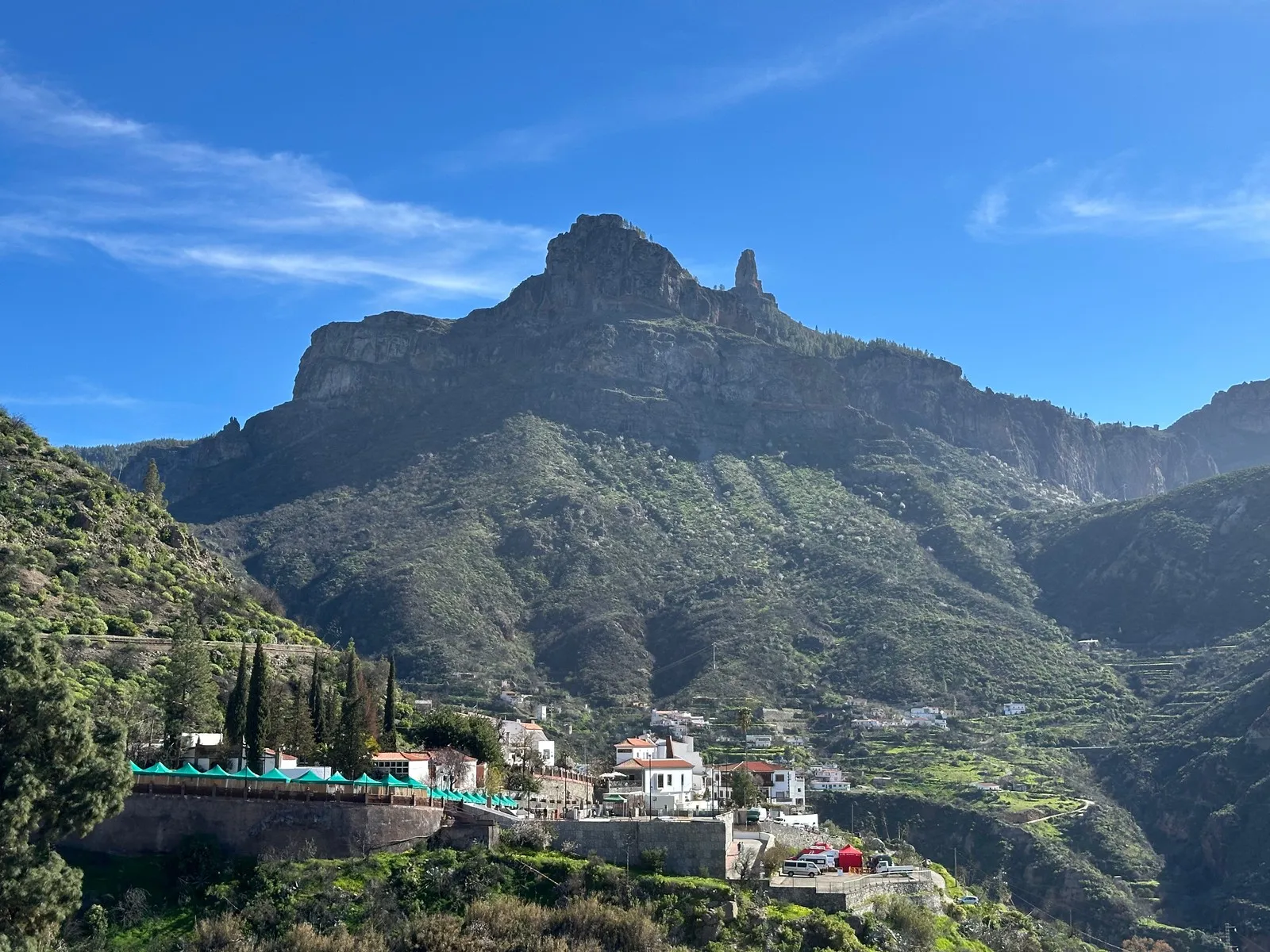
Tejeda under Roque Nublo, the fourth stop on this route, February 2026. Photo: Rvr, resized, CC BY-SA 4.0, via Wikimedia Commons.
The route at a glance
Set off at 9:00 at the latest. There is a lot on the list, and the sand in the dunes can turn hot in the afternoon, so the first stop is the one that wants the early hour.
Dunes of Maspalomas - 1 to 2 hours on foot
Mirador Astronómico de la Degollada de las Yeguas - 10 to 20 minutes
Mirador Degollada de la Cruz Grande - 10 to 20 minutes
Tejeda - 1 to 2 hours, and a good place for a late lunch
Pico de las Nieves - 20 to 30 minutes
Teror - 1 to 2 hours, and dinner
Driving time adds up to about three and a half hours for the whole loop, which makes it a 10 to 12 hour day door to door.
After Maspalomas the road turns into one long series of serpentines, and that stretch is as good as the stops on it. The other side of it: all that turning makes some people carsick. Taking the bends slowly helps, and it does not always solve it completely.
Before you set off
Take water and something to eat. Lunch may be planned in Tejeda in the early afternoon, and there is little in between.
Pack a warm layer. During the day the weather up at the summit is often much like Las Palmas. But when the cloud reaches above 2,000 m the summit sits inside it, and with wind it can then feel 10 to 20 degrees colder - at the one stop where you stand still.
The GC-60 and GC-600 are narrow and full of blind bends. There are a lot of cyclists on them, and oncoming traffic arrives closer than you expect.
Mind the daylight in winter. In December and January the sun is down shortly after 18:00, which puts the last stop in the dark. Either leave earlier, or make Teror the one you drop.
Roque Nublo only with an earlier start and a booking. It adds about three hours, you can no longer drive to the start of the path, and the slot has to be booked at reservasroquenublo.com days in advance, in high season weeks. The last section says how it works.
1. The dunes of Maspalomas
About 50 minutes from Las Palmas on the GC-1. A walk of 1 to 2 hours through the dunes is worth the early start: it is a protected dune field of several square kilometres, it looks like nowhere else on the island, and there is no shade anywhere in it.
It is a nature reserve, so stay on the marked paths. There are around 8 km of them, marked with bollards, and they are what keeps the dune field walkable and intact at the same time. The reserve also asks you not to build anything out of stones and not to camp. The rules in full: Help protect the dunes of Maspalomas.
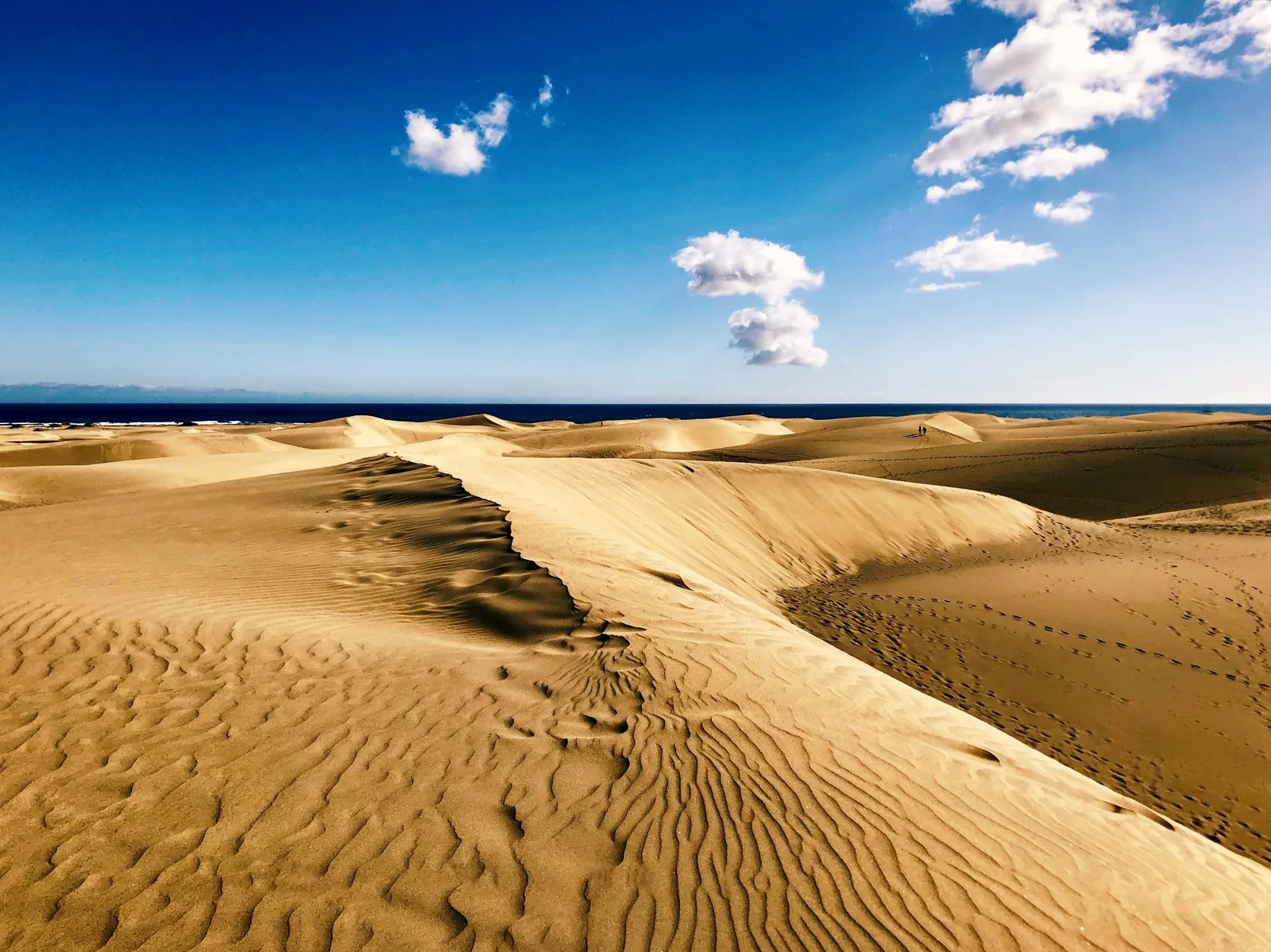
The dunes of Maspalomas, February 2020. The sea closes the far side; there is no shade anywhere in between. Photo: Marcela Střelcová, resized, CC BY-SA 4.0, via Wikimedia Commons.
Parking: free in the streets around here, at the northern edge of the dunes.
2. Mirador Astronómico de la Degollada de las Yeguas
About 15 minutes on, as the road climbs inland towards Fataga. The viewpoint looks straight down the Barranco de Fataga, and it is a natural 10 to 20 minute break on the way up.
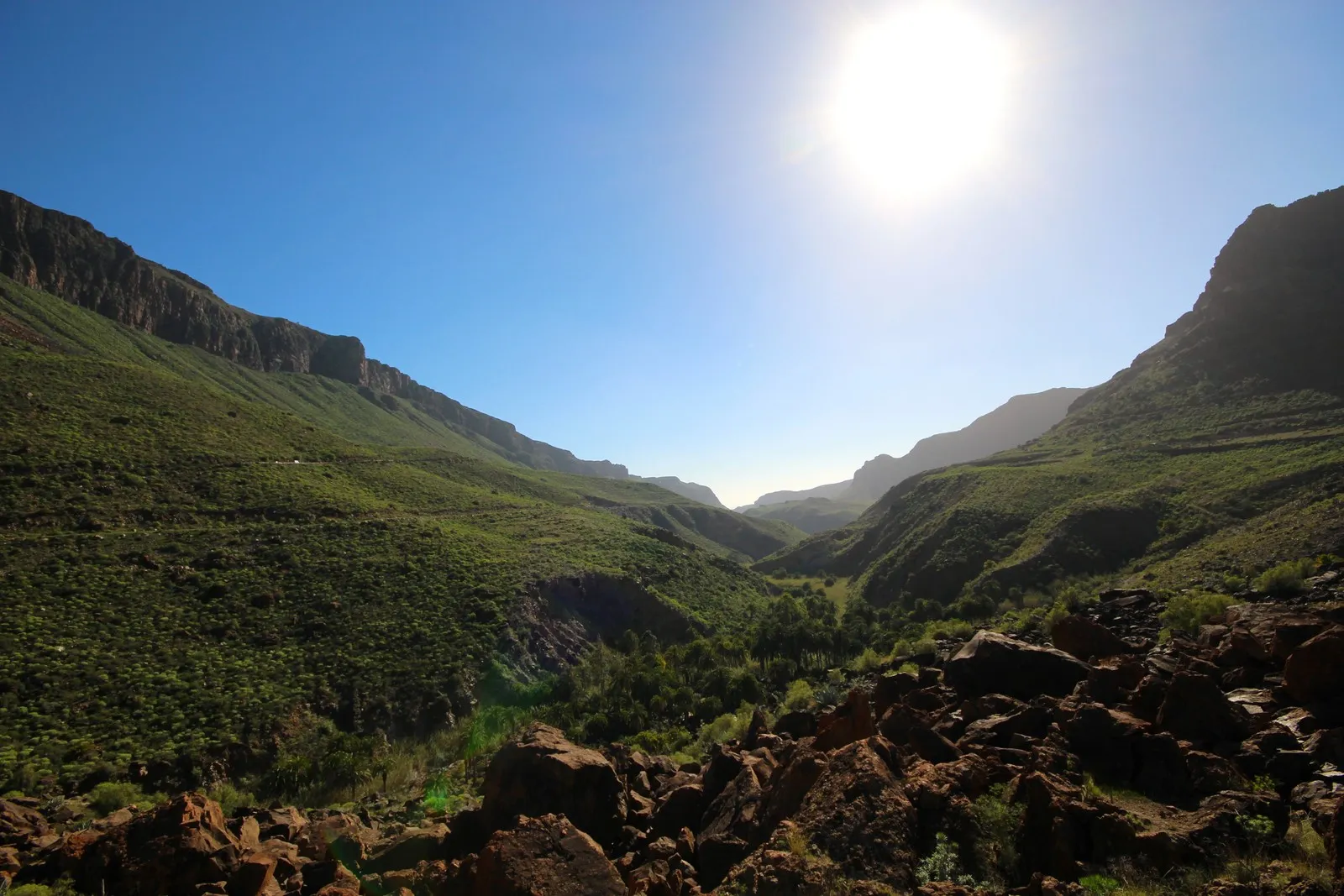
The Barranco de Fataga, the valley the viewpoint looks down. Taken from inside the valley rather than from the mirador. Photo: Victor R. Ruiz, resized, CC BY 2.0, via Wikimedia Commons.
3. Mirador Degollada de la Cruz Grande
Another 35 minutes up the same road. Same idea as the last one, a different valley, and by now you are high enough to feel the change in air and vegetation. Cruz Grande, 10 to 20 minutes.
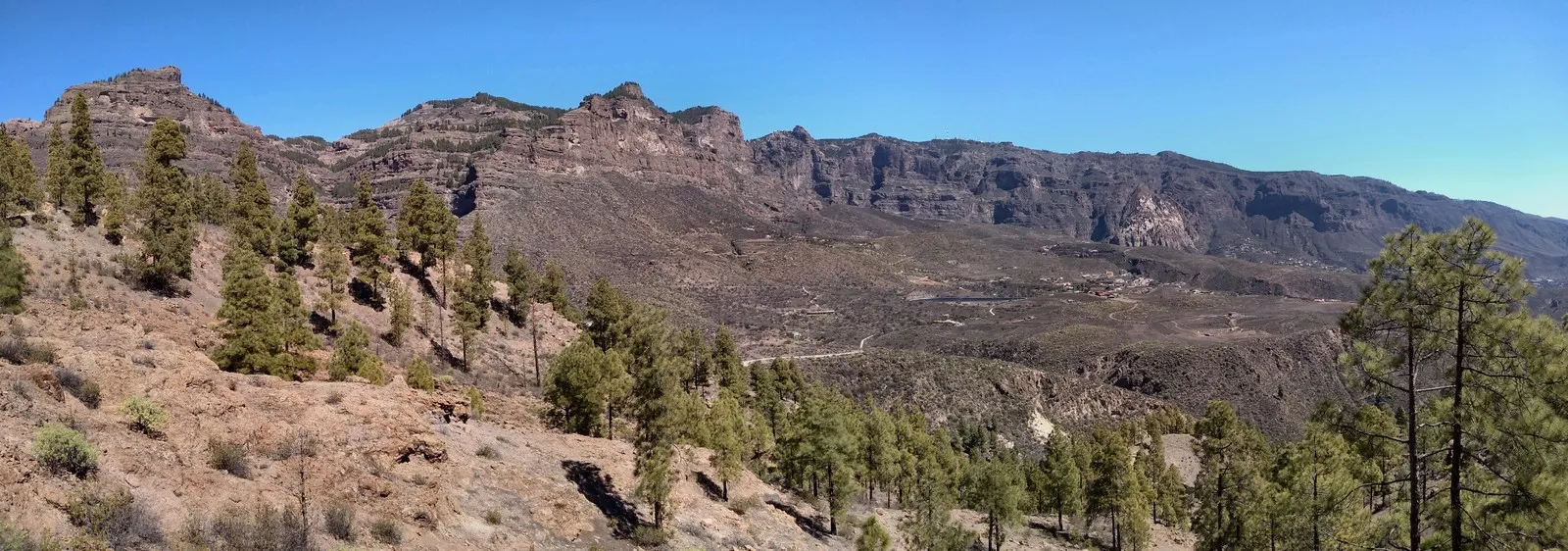
From the Mirador Degollada de la Cruz Grande at about 1,180 m, looking towards Pico de las Nieves, March 2024. Photo: AndyScott, resized, CC0, via Wikimedia Commons.
4. Tejeda, and lunch
About 30 minutes further, and the place to spend 1 to 2 hours. Tejeda is a white village built into the crater wall at around 1,050 m, and it is where a late lunch belongs on this route. It is known for its almonds, so the local sweets are the honest souvenir.
Tejeda is often introduced as the most beautiful village in Spain. The precise version: it is one of 126 villages certified by the association Los Pueblos más Bonitos de España, and it has held that certificate since 2015.
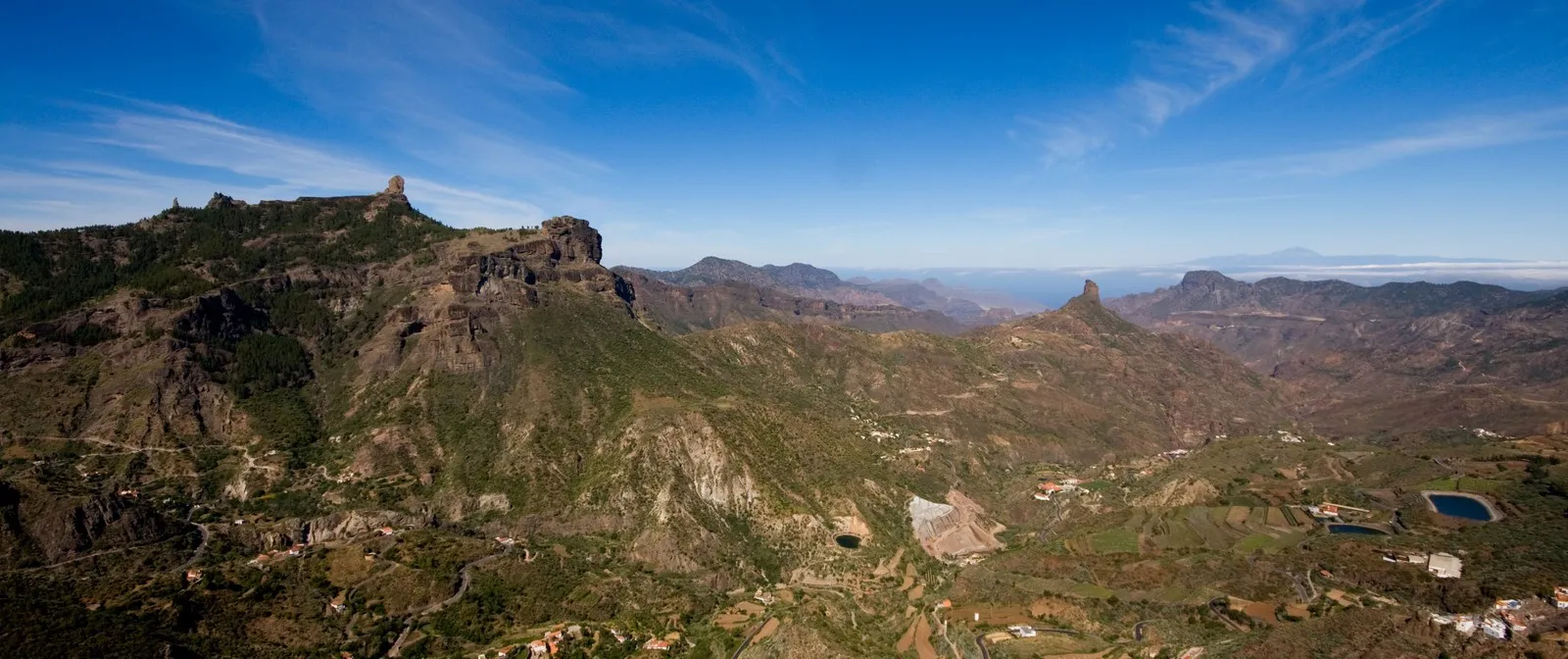
Looking into the caldera from Tejeda, 2010. Photo: El Coleccionista de Instantes, resized, CC BY-SA 2.0, via Wikimedia Commons.
Parking: the Cruz Blanca car park at the edge of the village. The lanes in the centre are not where you want to be looking for a space.
5. Pico de las Nieves
About 25 minutes from Tejeda, and the roof of the island. The viewpoint sits at 1,949 m and the road up to it is paved the whole way. On a clear day you see Roque Nublo in the foreground and Teide on Tenerife behind it, and on a cloudy one you see the inside of a cloud, which is its own experience. 20 to 30 minutes.*
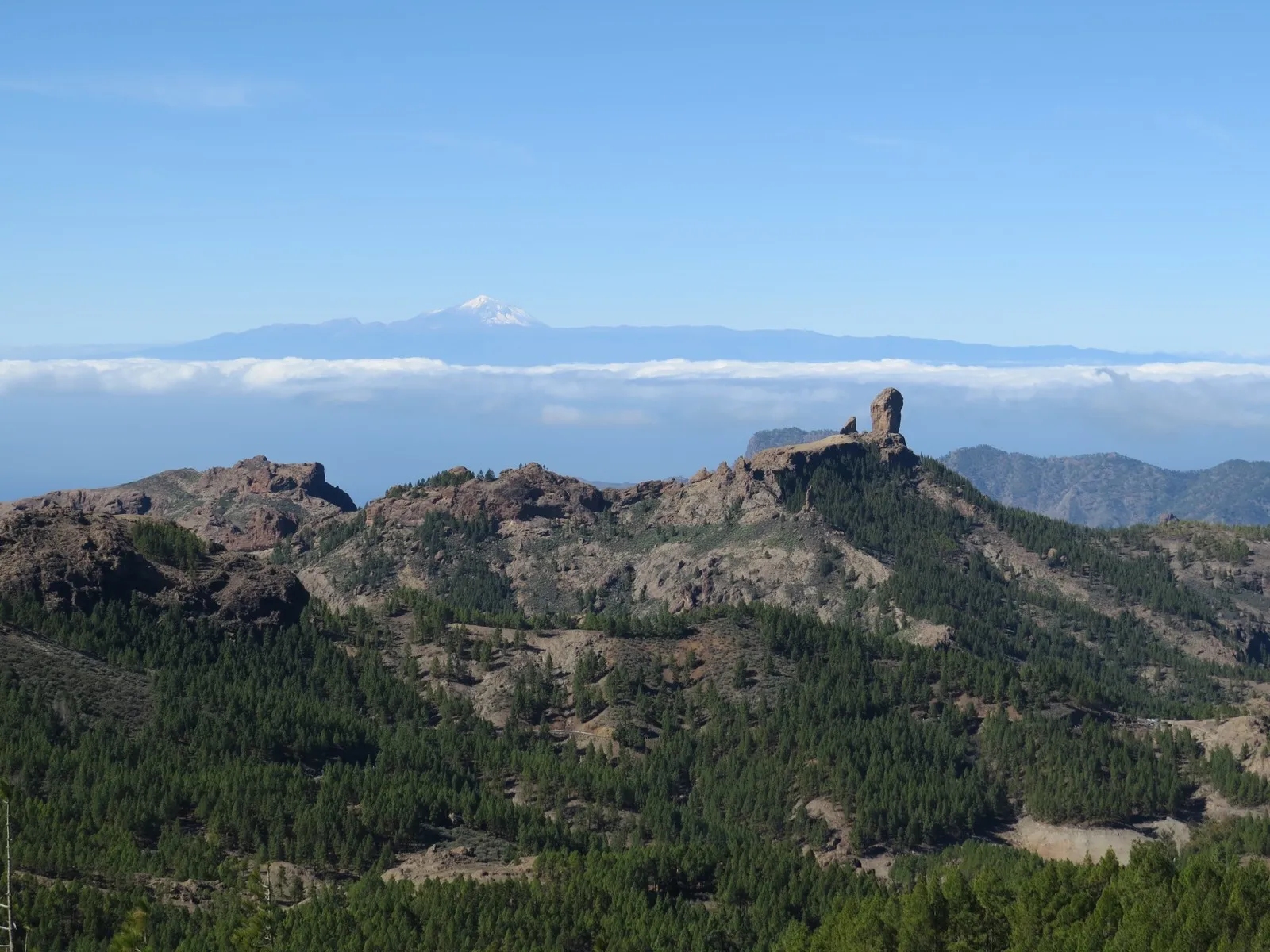
What the clear days are for: Roque Nublo in front, Teide on Tenerife behind, November 2014. Photo: Basotxerri, resized, CC BY-SA 4.0, via Wikimedia Commons.
* Two details that get stated wrongly often enough to be worth the line. The actual highest point of Gran Canaria is Morro de la Agujereada at 1,956 m, a rocky rise on the same massif, about seven metres above the viewpoint. And the plateau at the very top is a military radar station, so the summit itself is closed: where you stop is the viewpoint just below it.
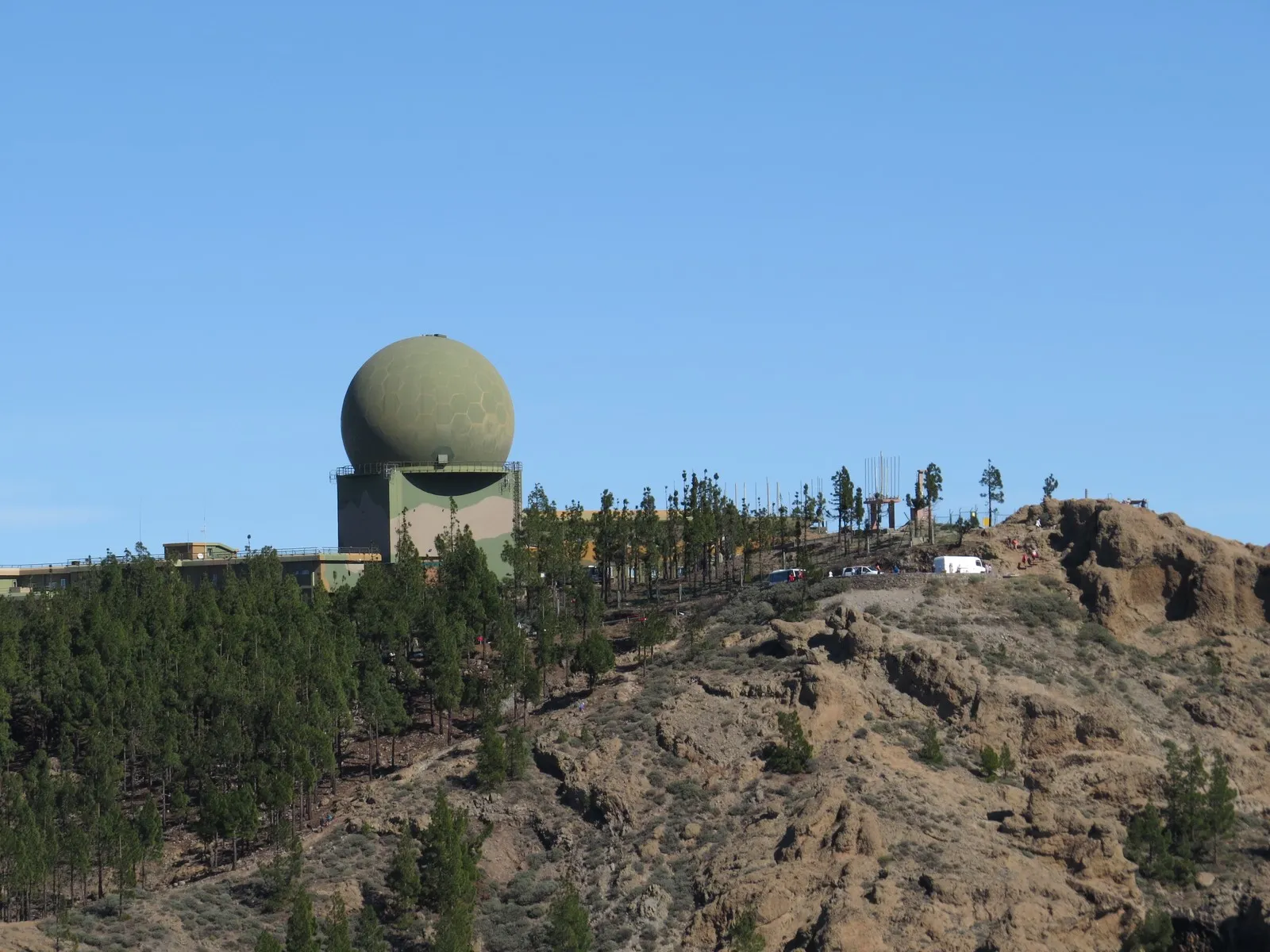
The radar dome stands on the closed summit plateau; the cars to the right of it are at the viewpoint, which is as high as you get. November 2014. Photo: Basotxerri, resized, CC BY-SA 4.0, via Wikimedia Commons.
6. Teror
About 40 minutes down into the green north. Teror is one of the pretty small towns on that side of the island, with wooden balconies along the main street and the Basílica de Nuestra Señora del Pino at its centre, the church of the patron saint of Gran Canaria. A walk through the old town, the basilica and dinner fill 1 to 2 hours. From there it is half an hour back to Las Palmas.
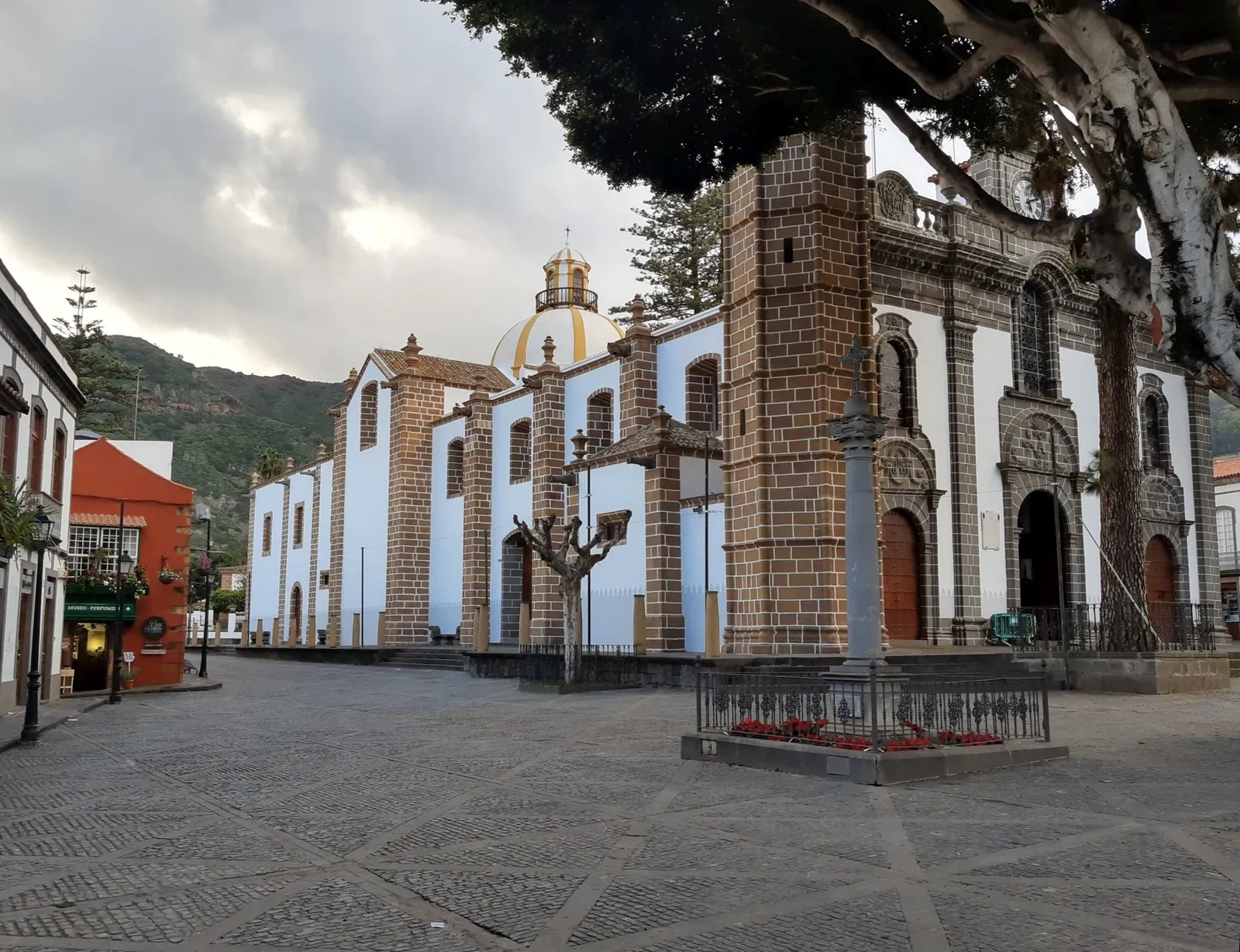
The basilica and the square it stands on, January 2022. On a Sunday morning the market fills this square. Photo: Gerda Arendt, resized, CC BY-SA 4.0, via Wikimedia Commons.
If the day is running late, this is the stop to drop: it is the one that is most easily reached on its own another time, and the only one on the route that a city bus serves well. The Plaza del Pino in front of the basilica is where to aim for.
The Sunday market around the basilica is the biggest on the island - island cheeses, Teror chorizo, palm honey. It runs from 9:00 to 15:00, and on this route you arrive in the late afternoon, so it is a trip of its own rather than part of the car day. An easy one, though: Teror is well served by bus from Las Palmas.
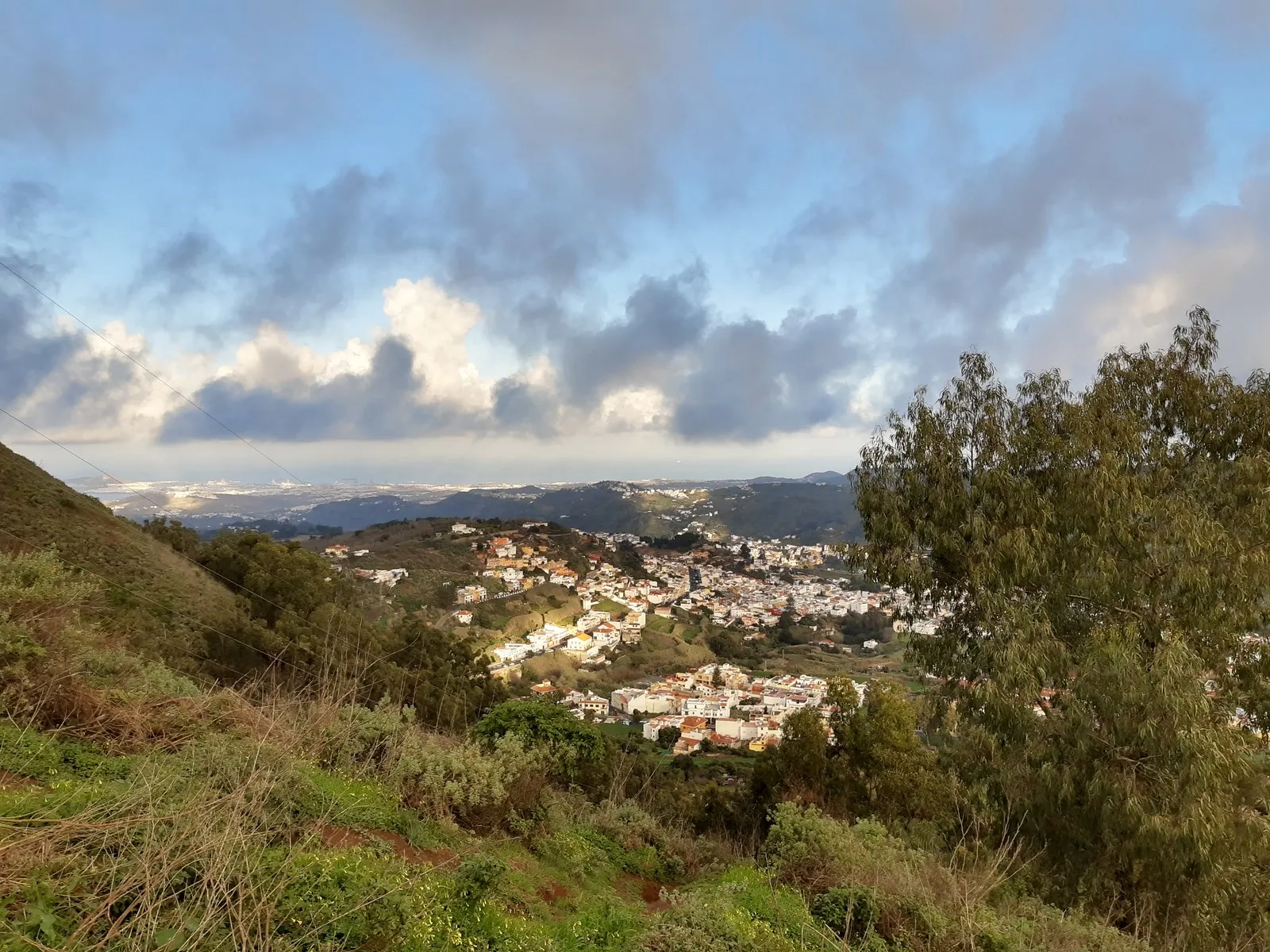
Teror in its valley, the north coast behind it, January 2022. Photo: Gerda Arendt, resized, CC BY-SA 4.0, via Wikimedia Commons.
A sample timeline
Starting at 9:00, with the stops at the shorter end of their range:
09:00 leave Las Palmas
09:50 to 11:30 dunes of Maspalomas
11:45 to 12:00 Degollada de las Yeguas
12:35 to 12:50 Cruz Grande
13:20 to 15:20 Tejeda, late lunch
15:45 to 16:15 Pico de las Nieves
16:55 to 18:30 Teror, dinner
19:05 back in Las Palmas
One optional addition
Roque Nublo, the rock that stands on half the postcards of the island, is reachable from this route - but only if you start earlier than 9:00, book it days in advance and are ready for a long day. It is half a day of its own, not a detour, and all three conditions have to be settled before you set off.
You cannot drive to the start of the path any more. Parking around Roque Nublo, La Goleta included, is closed to private cars. You leave the car in Tejeda - which is stop 4 on this route anyway - or at Cruz de los Llanos, and take the shuttle bus from there; it runs a circular route every 30 minutes between 9:30 and 18:00. On foot from Cruz de los Llanos the shortest way up takes about 50 minutes one way.
And the trail itself needs a booked slot. Between 10:00 and 17:00 access is capped at 60 people an hour, and the slots are free and booked in advance at reservasroquenublo.com. The booking and an ID are checked where the path begins. Good days fill up, so book a few days ahead, and in high season a few weeks.
Counting the shuttle, the climb, the time at the top and the waiting, the addition is closer to three hours than to one. On a day that already runs to ten or twelve hours, that is why it only works with an earlier start, and it still means leaving something else out - Teror is the obvious candidate. Access rules and shuttle times change, so take them from the official Roque Nublo page before you go.
Renting the car
Where to rent, what a car does and does not save you in Las Palmas, and the parking question that is worth settling before you book: Getting Around With and Without a Car.